

By Inna Rogatchi
September 2025
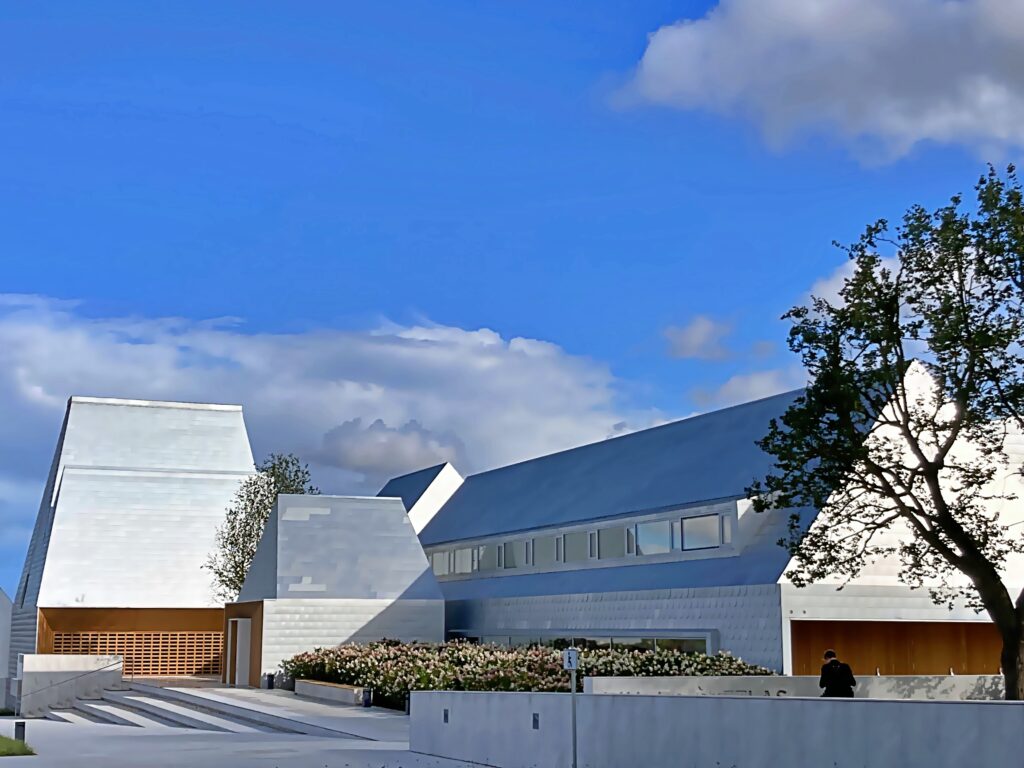
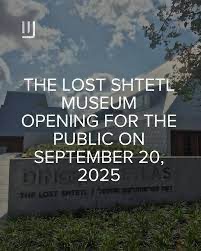
On September 20th, 2025, on the eve of the National Holocaust Day in Lithuania, among several major events in the country, the new museum of Jewish history Lost Shtetl was opened in Seduva, in the north of the country. The museum is dedicated to preservation of the memory, history and culture of the shtetls, the way of life of Jewish communities in Eastern Europe and Baltic states. The world that has been completely eradicated by the Shoah.
Apart of small museum in Poland dedicated to shtetl life, a couple of online resources on the theme in Poland and Belarus, and a random exhibitions in New York by the YIVO institute, at the National Museum of Art of Ukraine, the Jewish Museum of Norway, and the POLIN museum in Warsaw, and various places in Lithuania, this is the newest and largest museum in Europe dedicated to the unique culture and way of live of millions of people that not just vanished on its own distinction , but which was hand-made destroyed and annihilated as a way of life.
Additionally to the National Holocaust Museum that was opened in Amsterdam in 2024, the Lost Shtetl museum is also the newest Jewish history museum opened in Europe in 2024-2025. It is the largest memorial to the Jewish people and their history in the Baltic states.
A month before the opening, the museum held a special international commemorative event in late August. It was also a chance to see the newly accomplished museum in detail. I have been following this long and elaborated project since its early stages, almost a decade. In May 2018, along with many people from Lithuania and abroad, I was also present at the ceremony of the laying of a corn-stone of the future building of the museum. To see it completed now has been gratifying.
In this essay series, I am analysing various aspects of the new museum, its architecture, its interior and exterior design, its artifacts, and some unique human stories connected and presented there.
Respectful Memory & Decency of Civility: Commemoration in Seduva
On 25th August 1941 the Jewish life of one of so many shtetl places in Lithuania, in Seduva, was annihilated. About 700 children, women, elderly and men were cruelly and energetically murdered in the nearby forest.
Eighty four years later, to the date, the time of three and half generations, many people from all around the world whose roots are from Lithuania, and even precisely from Seduva, gathered in the place which is more than two hours drive from Vilnius, to commemorate the solemn date, and to see in advance the new memorial museum which was to be opened in September 2025.
In this special project, the museum and memorial complex includes a lovingly restored Jewish cemetery and meditative comforting park around the truly remarkable complex of buildings, with smashing in many senses interior design and permanent exhibition.
When visiting Lithuania among three Baltic states with an official visit in the beginning of August 2025, the President of Israel Isaac Herzog and his wife Michael spent several hours in Seduva at the special mezuzah fixing ceremony of the door of the Lost Shtetl Museum. After a detailed two-hour tour through its premises and the core exhibition, President Herzog called the museum ‘outstanding’. He had a good reason for this praise.
* * *
On that sunny August day, many very different people came to Seduva, including the descendants of the Lithuanian Jews from Toronto to New Mexico and from Cape Town to London, Lithuanian top politicians, Members of the European Parliament, Ambassadors and distinguished diplomats, important representatives of the leading international Holocaust and Jewish institutions, such as Yad Vashem and POLIN, historians , leaders of the cultural life in Lithuania, international stars of music in its different genres.
The one thing that has united all those different people from all around the world was interest, with a capital I. Their all and each of them genuine interest towards what we all were seeing around and in front of us: the complex of buildings which makes a special, distinctive statement in its modernity and elegance, the trademarks of our great Finnish architect professor Rainer Mahlamäki who authored the project, cutting-edge interior and permanent exhibition design by world-famous RAA, Ralph Appelbaum Associates company, soothing park around the building produced by also quite well-known in its field ENEA, that truly special completely restored, to be ready in 2013 after a three-years work, Jewish cemetery nearby. All together it works and impresses very different people, and not necessarily with a Jewish background, in a deeply humane way.
* * *
With regard to the new museum’s architecture, I gladly noted the people’s unanimously fantastic reaction to the complex of buildings, its harmonious architectural decision, its modernity, its articulated messages, its metaphors, and its light which is the main proponent in everything what Rainer Mahlamäki creates, even – and even more so – when he deals with the darkest and most difficult historical themes.
The complex of the Lost Shtetl buildings is the fruit of almost 10-years hard work of professor Rainer Mahlamäki and his dedicated, talented and reliable team from Lahdelma & Mahlamäki Architects Finland, in cooperation with their Lithuanian colleagues from SA2 architectural bureau, and the teams from Estonia, Switzerland, England, Italy and the United States in all polyphony of what’s a polyphony of a complexed international project is about.
Symbols of the Heart: Modern Architecture of Memory
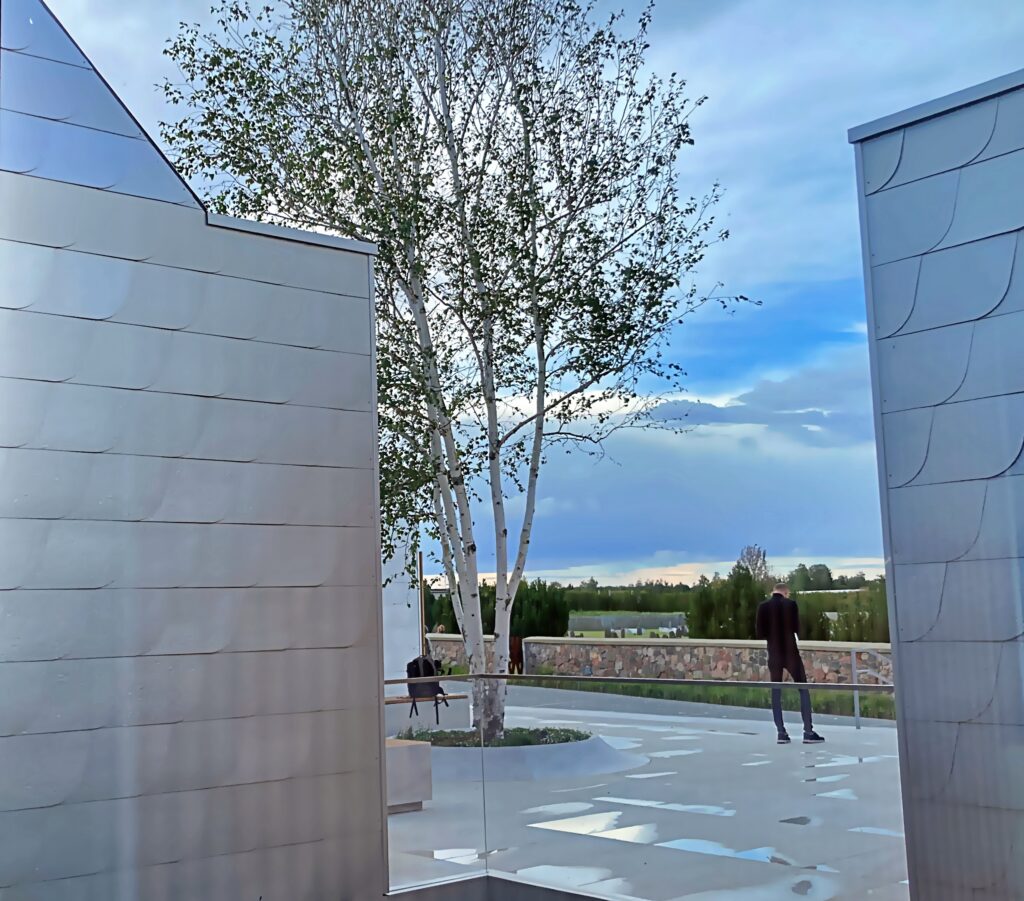
There are very rare architects who are able to create a harmonious co-existence of distinctively different domains, such as modernity and sharpness of contemporary architecture from one side, and living nature from the other.
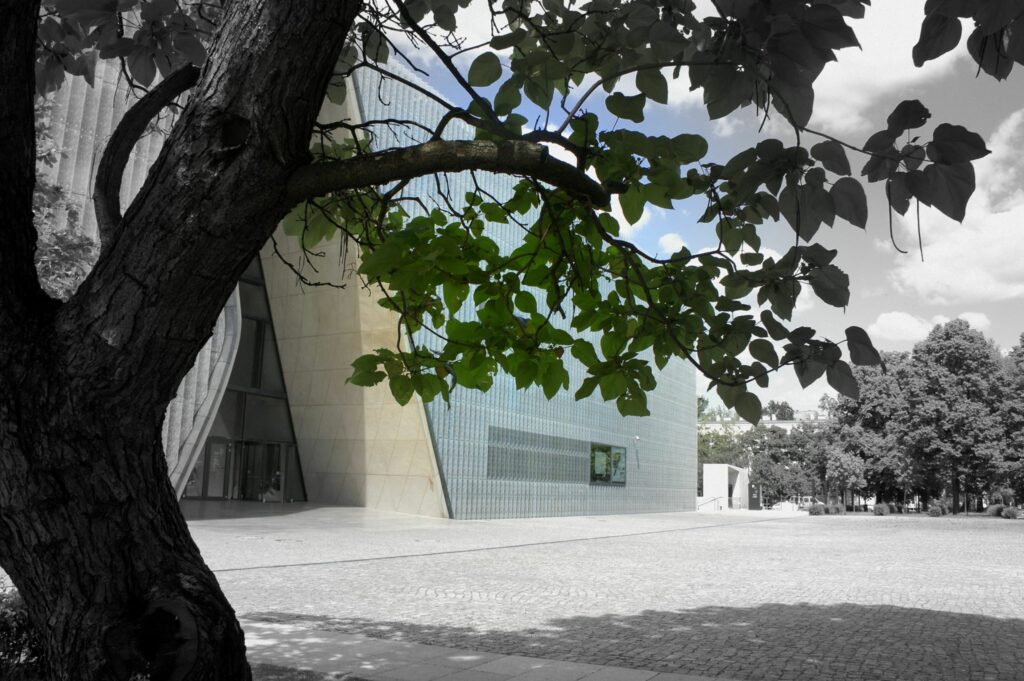
Professor Rainer Mahlamäki is one of those rare architects whose vision have created both beautiful and humane new reality that can be seen in both of his important buildings appeared in a decade between them, POLIN Museum in Warsaw opened its doors in 2014, which 10th anniversary we all celebrated in un uplifted way recently, and new Lost Shtetl Museum in Seduva.
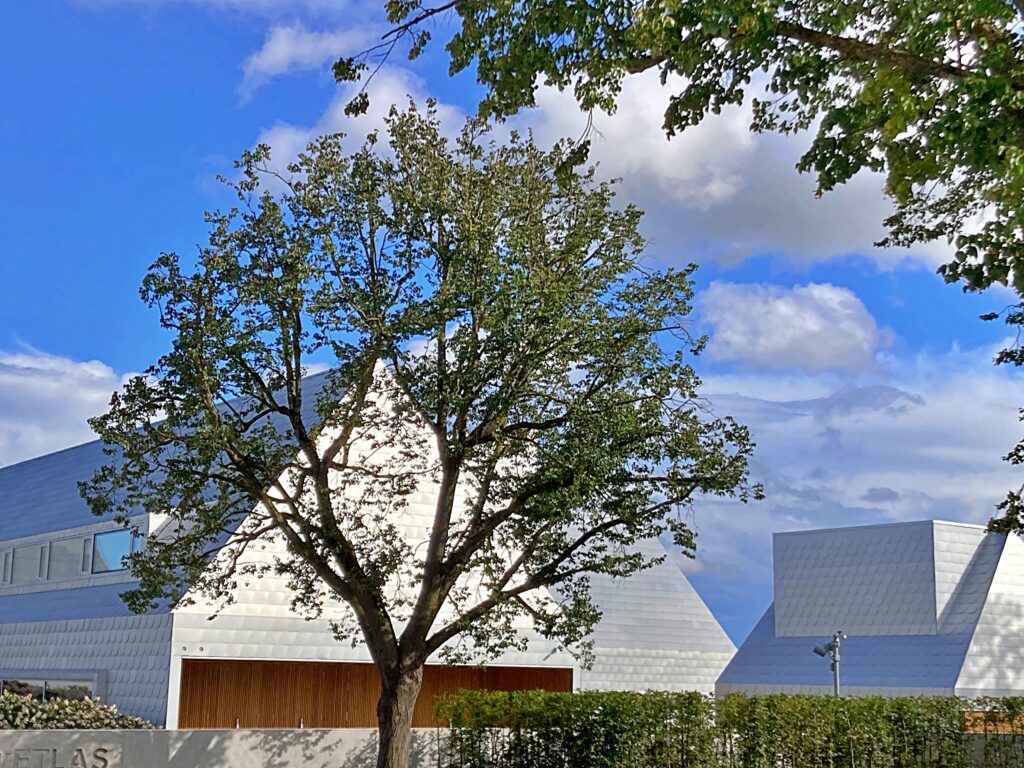
These two photographs of mine, also taken in a decade between them, captured that vision of the architect. The vision that actually creates a new reality, which is and will be imprinted in our perception and will stay in memory of so many.
This new reality, which is a harmonious creation, is yet more and specifically meaningful in the cases of the buildings that houses both incredibly rich but also bottomlessly tragic history, as it is the cases of both POLIN and Lost Shtetl museums, two museums of Jewish history in Poland and Lithuania, not only and not specifically the history of Holocaust in the both countries, but a wide presentation of what is an integral part of the European history and civilisation.
These beautiful and emblematic trees in the front of the POLIN and Lost Shtetl museum facades indicate life, and strive for life, ongoing living memory, continuity, and the thread of humanity.
In his realised vision, Rainer Mahlamäki has created a new, special spatial reality. The space which speaks to one directly. The space of humanity.
Canyon of Hope & Message of Light: Essential Features of the New Museum
Architecturally, the Lost Shtetl Museum is a purposefully accommodative building. It was done by its author with attentive care, to create, or as professor Mahlamäki emphasises, « to re-create the life that has been annihilated ».
Coming close to the building which is situated in an open airy place in the Lithuanian country-side, one immediately feels very comfortable. Which is not the sensation one expects to have at the museum telling on such a tragedy. This is one of the trade-marks of Rainer Mahlamäki’s architecture, his wish and ability to create not just a place, but the place of comfort, psychologically as well. And one can feel it in practically all Rainer’s buildings. This is a particular focus and a special talent to implement it, undoubtedly.
But this architect, who is a deep and strong intellectual, is not satisfied with one dimension in his architecture, far from it. Entering the building of the Lost Shtetl Museum, one is getting surprised almost instantly, and then non-stop.
The main element of this surprise is the building’s openings. Visitors of the museum are facing them in several places, and every time, the effect of opening works with no mistake.
An opening effect in architecture is a tricky thing. If an architect fails in it, it will be counter-productive, and it would be felt as unnecessary, something like a seasonal decoration that has been forgotten to be taken away in time.
But if the opening, especially inside the modern building, is done with vision and masterly, it adds a new dimension to the building , and to a visitor’s impression of the building, with a long-lasting reflection. The Lost Shtetl Museum building in this respect is very successful and highly memorable indeed.
There are several openings in the museum, not too little and not too much. They are all different. Being an organically talented person, Rainer Mahlamäki possesses a special quality of not repeating himself and the elements of his design. In some of the openings, we are seeing all elements of living nature: skies, trees, plain calm landscape in some instances.
This creates the dialogue between a visitor and the building momentarily, and this instant interconnection sets up a dialogue for a visitor during his elaborate and rather uneasy travelling through quite intense permanent exhibition of the museum that tells about the life which is not ‘simply’ not anymore, but which has been interrupted and destroyed brutally and with zealotry and unlimited cruelty.
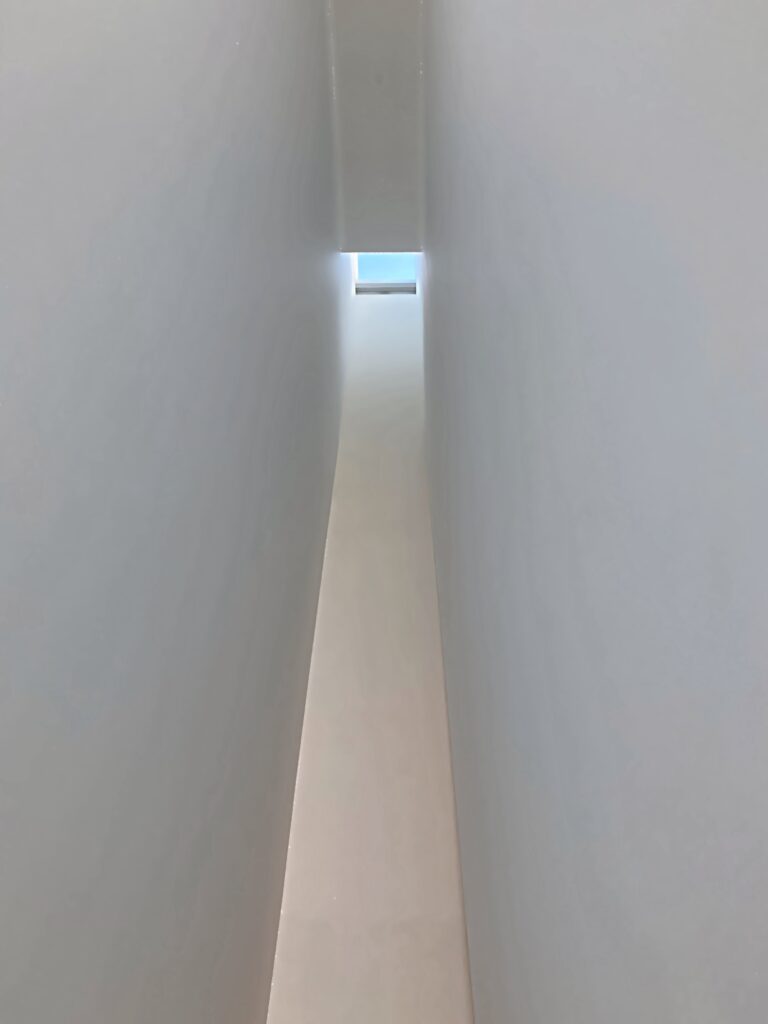
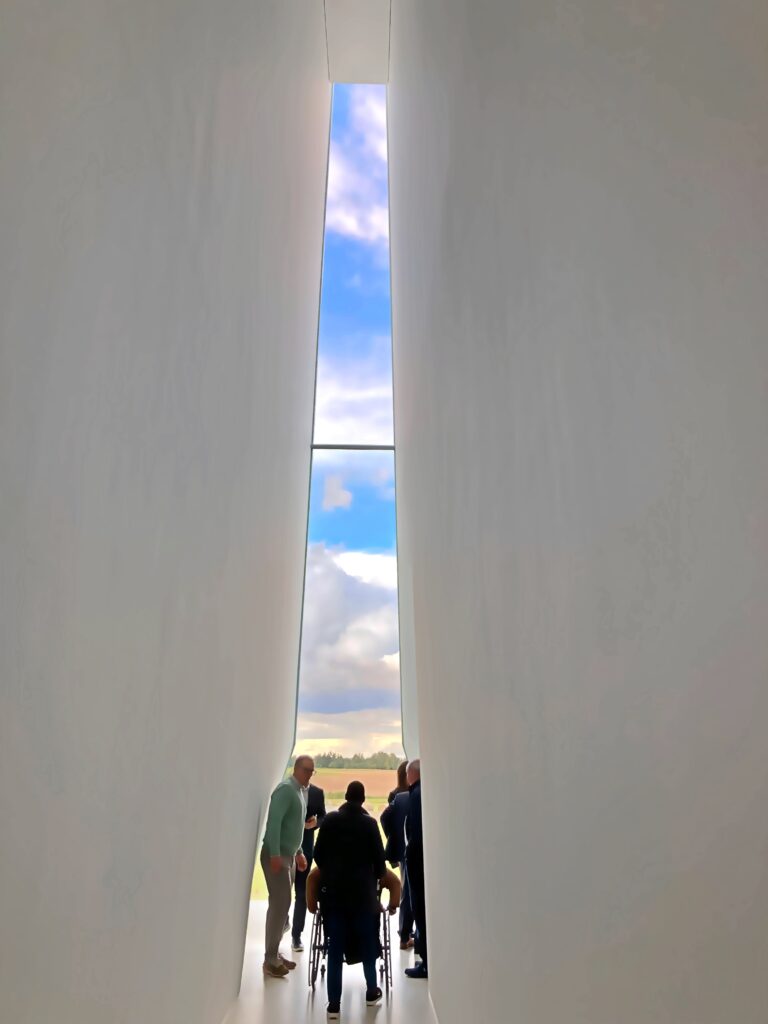
The Canyon of Hope in this museum in my opinion should bring to its architect a very substantial international architectural prize.
Not only does the Canyon of Hope lead people to the skies after a rather uneasy walk through the museum’s galleries. It hovers over the meticulously restored Jewish cemetery which is located just nearby the museum’s building. This Canyon of Hope is a grandiose success of Rainer Mahlamäki’s building of the Lost Shtetl Museum. I observed how people were taken by it, and I am sure that it will become its re-sounding symbol.
Additionally to this resounding architectural philosophy of hope, the architect provides a very smart architectural dialogue in the museum’s Canyon space. Opposite the Canyon of Hope, there is another canyon and another opening. I call it Canyon-2.
It is very high and it is designed in the same coloristic key, thus making the dialogue of two canyons organic and natural. But the window of the Canyon-2 is a fraction of the size of the Canyon of Hope’s opening, and it is placed incredibly high, in the way that one needs extra attention to notice it. The message that the dialogue between the two canyons creates is gentle and meditative, and it provides universality of spatial, metaphorical and psychological completeness of the space.
The space created by those two canyons opposing each other is like a special stratum, the special place to think. And think again.
The Canyon-2 idea has a connotation with the opening in the powerful Daniel Liebeskind’s Jewish Museum in Berlin. But it is quite different. In Berlin, the place of the opening is the place of barely controllable horror in a stylised prison cell. One is so impressed there that many people instinctively inclined to forget it, to take it away from their consciousness, because it is objectively very difficult to bear. Not many succeed though, because Liebeskind’s decisions in the Jewish Museum in Berlin are very powerful on the edge of extreme.
In the Lost Shtetl Museum, the window opening of Canyon-2 opposing the long vertical opening of the Canyon of Hope, is placed much higher, curved not directly, but with Mahlamäki’s trade-marked beautiful curves, as he applied them also in the POLIN building, thus making the space immediately comforting, and inviting mediation there.
The space of two canyons in the Lost Shtetl is as if it embraces you, it supports you. This is a rare sensation in modern architecture, doubly so when the subject is the Holocaust. That space works miraculously. It is not about Hope Against Hope. It is about Hope as an element. And this is what life is about.
There was not a single person among those who visited the museum on the special commemorative event honouring the memory of the victims of Jews of Seduva murdered in August 1941, who would not spend a substantial time in the Canyon of Hope. We all needed it.
What we experienced at the museum was a special atmosphere of respectful remembrance, caring time-travelling, which actually builds our own, each one’s individually, status of decency and civility. The house of this memory built by Rainer Mahlamäki, his team and colleagues, is highly sophisticated, very modern and agelessly elegant newly created space that is a unique human and professional achievement of its own.
August – September 2025
Seduva – Vilnius – Helsinki







Poster un Commentaire