
« Be Our Voice »: A Medical Worker’s Plea from Iran After a Massacre by the Islamic Republic
Après dix jours de coupure totale d’Internet en Iran — un blackout numérique national dénoncé par les organisations de défense des droits numériques — une brève fenêtre de connexion a permis, hier, quelques échanges avec l’intérieur du pays.
C’est dans cet interstice fragile qu’un soignant de Chiraz a pu transmettre son témoignage. Assistant chirurgical à l’hôpital Namazi, l’un des plus importants centres médicaux du sud de l’Iran, il n’a pu communiquer que par messages écrits. Les appels vocaux et vidéo restaient impossibles.
Ce qu’il décrit relève d’un effondrement.
Dans les hôpitaux de la ville — notamment à Westen Ghodousi —, les morts se seraient comptés par milliers.
« Le nombre de corps était si élevé qu’il n’y avait plus d’espace. Les gens marchaient dessus. »
Selon les informations recueillies indirectement auprès du personnel hospitalier, ainsi que les récits de blessés ayant refusé d’aller se faire soigner par peur d’être arrêtés, le soignant estime que 4 000 à 5 000 personnes auraient été tuées à Chiraz seulement.
Aucune confirmation indépendante n’est possible. Les journalistes sont empêchés d’accéder à la zone. Internet est coupé. Les chiffres officiels sont inexistants.
Et pour la source, cela n’a rien d’accidentel.
« C’est pour cela qu’ils ont coupé Internet. Pour que personne ne puisse voir combien ils ont tué. »
Une stratégie de terreur ciblée
Selon ce témoignage, les forces de sécurité ont modifié leurs méthodes par rapport aux précédentes vagues de contestation, notamment le mouvement « Femme, Vie, Liberté » de 2022.
Cette fois, affirme-t-il, les tirs visaient le visage.

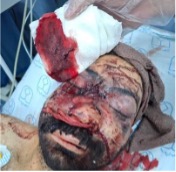

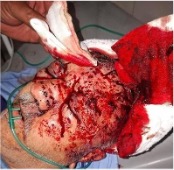

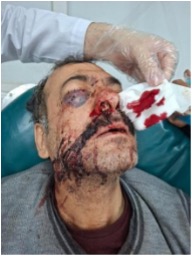
La majorité des blessés admis à l’hôpital présentaient des impacts au visage. Beaucoup étaient des femmes et des adolescentes.
« Ce n’était pas des tirs au hasard. Ils visaient les visages. Et ils visaient les jeunes femmes. »
Le symbole est brutal : mutiler le visage, c’est frapper l’identité même.
Plus grave encore : des patientes auraient été privées de soins. Certaines, amenées à l’hôpital, auraient été emmenées par les forces de sécurité avant toute prise en charge médicale.
Des membres du Basij et des agents en civil entraient régulièrement dans l’établissement, empêchant les médecins d’intervenir. Des affrontements ont éclaté. Des médecins auraient été battus.
Les banques de sang seraient désormais vides.
La peur a vidé les hôpitaux :
« Les blessés sont soignés à domicile avec des moyens dérisoires. Beaucoup meurent d’hémorragies faute de traitement. »
Le prix des corps
Le témoignage évoque également des pratiques glaçantes concernant les dépouilles.
Les corps seraient retirés avant enregistrement officiel. Des familles se verraient refuser l’accès à leurs morts.
Selon les estimations avancées, à Chiraz, les proches devraient payer environ 2 500 euros — qualifiés de « prix du sang » ou « prix de la balle » — pour récupérer un corps. À Téhéran, les montants pourraient atteindre 5 000 euros par projectile.
Dans de nombreux cas, les corps de femmes ne seraient pas restitués.
Interrogé sur d’éventuelles violences sexuelles, le soignant ne peut confirmer directement, mais ajoute :
« Il est presque certain que des détenues, surtout des femmes, subissent des agressions sexuelles. Ne pas rendre les corps peut aussi servir à effacer des preuves. »
Infiltration et tirs à bout portant
Le soignant rapporte avoir vu des agents en civil infiltrés parmi les manifestants, sortir soudainement des armes et tirer à courte distance. Des tireurs d’élite auraient été positionnés sur les toits.
Lui-même, ainsi que sa sœur vivant à Ahvaz, ont été blessés par balle.
La surveillance est constante. Les téléphones sont contrôlés dans la rue. Les messages doivent être effacés immédiatement.
Avant de couper la communication, il a transmis une demande simple :
« Utilisez la sécurité de vivre dans un pays libre pour dire au monde ce qui se passe ici. »
Un silence organisé
Aucune vérification indépendante n’est aujourd’hui possible. Aucun chiffre officiel n’existe. Le blackout informationnel rend l’horreur invisible.
Mais l’absence d’image ne signifie pas l’absence de crime.
Dans les régimes autoritaires, le silence est une arme.
Couper Internet, c’est couper les preuves.
Retirer les corps, c’est retirer les traces.
Empêcher les soins, c’est prolonger la punition.
Reste la parole — fragile, fragmentaire, menacée — de ceux qui demandent simplement : « Soyez notre voix. »
Be Our Voice: A Medical Worker’s Plea from Iran After a Massacre by the Islamic Republic
Safoora Cheriki
After ten days of a total internet shutdown in Iran -described by digital rights groups as a nationwide digital blackout– limited connectivity was briefly restored yesterday, allowing rare communication with sources inside the country.
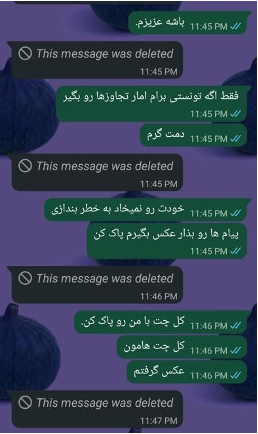
During this short window, this reporter spoke via WhatsApp text messages with a medical worker (my friend) who serves as a surgical assistant at Namazi Hospital in Shiraz, one of southern Iran’s largest medical centers. Voice and video calls were still largely impossible.
Medical worker described scenes of mass death inside the city’s hospitals, especially “Westen Ghodousi” in Shiraz:
“They told me the number of dead was so high that there was no space left. Bodies were everywhere. People were walking over them.”
Based on what the source says they witnessed indirectly through hospital staff, as well as repeated accounts from wounded civilians who avoided hospitals out of fear, the medical worker estimates that between 4,000 and 5,000 people have been killed in Shiraz alone.
According to the source, hospitals were rapidly overwhelmed, while security forces removed bodies before any official registration could take place. “Families were either too afraid to report deaths” or were denied access to the bodies altogether.
With internet access largely cut off and journalists barred from the area, no independent verification or official casualty figures exist. The source said this absence is deliberate.
“This is why they shut down the internet, no one can see how many people they’ve killed.”
According to the source, who requested anonymity for security reasons, security forces have significantly changed their tactics compared to previous protest waves, including the 2022 “Woman, Life, Freedom” movement. “This time they were deliberately shooting people in
the face,” the source said, adding that most of the injured brought to the
hospital had facial gunshot wounds.
The medical worker said that most of the injured they personally encountered were women and teenage girls, many of them suffering from gunshot wounds to the face.
According to the source, even inside hospitals, female patients were often denied treatment altogether.
“I saw so many young women and teenage girls who had been shot in the face. Some of them were brought to hospitals, but they were not treated. They were taken away.”
The source added that the pattern appeared deliberate.
“This was not random fire, they were targeting faces. And they were targeting young women.”
The medical worker reported that Basij forces and plainclothes security agents repeatedly entered the hospital, allegedly with the cooperation of hospital security, and prevented doctors from treating wounded protesters. In several cases, injured patients were reportedly taken away by security forces before receiving medical care.
“Doctors tried multiple times to stop them and protect the patients, It led to physical confrontations. Some doctors were beaten.”
The situation inside hospitals is described as increasingly dire. According to the source,
blood banks are now empty, leaving medical staff without sufficient blood supplies to treat the wounded.
Fear of arrest has also dramatically reduced hospital visits.
“People are too afraid to go to hospitals, most of the injured are being treated at home with extremely limited resources.”
Instead, families reportedly ask trusted doctors and nurses to secretly visit homes and provide medical care. The source warned that “many deaths are not caused by immediate gunshot wounds but by severe bleeding and lack of proper medical treatment”.
The source also described disturbing practices surrounding the bodies of those killed.
“Plainclothes force/militia forces often refuse to release the bodies,” they said.
According to estimates shared by the source, families in Shiraz are being asked to pay what is described as “blood money or bullet price”– reportedly around €2,500 – in exchange for the release of a body. A separate contact in Tehran reportedly cited amounts as high as €5,000 per bullet.
“In many cases, the bodies of women are not returned at all” the source said.
When asked about reports of sexual violence, the source said they had no direct confirmation but added:
“It is almost certain that detainees– especially women– are subjected to sexual assault. One reason women’s bodies may not be returned is to eliminate evidence of rape.”
The medical worker also reported firsthand witnessing plainclothes agents embedded among protesters, who would suddenly draw firearms and shoot demonstrators at close range. According to the account, snipers were positioned on rooftops, targeting protesters.
The source added that both they and their sister, who lives in Ahvaz, were injured by gunfire during the unrest.
Due to intense surveillance, the source said “we can’t carry our mobile phones safely, as security patrols routinely stop people in the streets and search their devices”. Before losing contact, the source said they would be forced to delete all messages immediately to avoid arrest.
Multiple other contacts inside Iran have separately reached out during brief connectivity windows, asking that their voices be heard internationally.

“They asked me to be their voice, to use the safety of living in a free country to tell the world what is happening while they are trapped under internet blackout, media censorship, and fear.”
Merci à H.Paszt