Israel’s postwar plan allowing a small group of vetted private importers to bring goods into Gaza triggers accusations of opaque selection, monopolized supply chains and soaring consumer prices, as residents say mechanism fuels parallel black economy
Israel’s new system for moving humanitarian goods into Gaza through a vetted group of private sector traders is facing criticism from Palestinian commercial officials, who say the process lacks transparency and may deepen existing economic distortions in the territory.
After the war, the Coordinator of Government Activities in the Territories (COGAT)—a Defense Ministry unit tasked with the coordination and facilitation of humanitarian initiatives in the West Bank and Gaza—announced that, under a Cabinet decision, humanitarian aid to Gaza would expand through a “new mechanism” allowing goods to enter via private merchants. The statement said a small group of Gaza traders had been approved following “rigorous security screening” and were required to meet clear criteria.

According to Israeli authorities, all money transfers must be carried out exclusively through bank transactions under tight oversight. Every truck entering Gaza is checked by the Crossing Authority, and officials stress that Hamas has “no access whatsoever” to the mechanism.
“The approved traders were thoroughly vetted. None has any link to Hamas,” a security official told ynet, adding that the system is being handled “with maximum caution” given the sensitivity of the situation.
But inside Gaza, the assurances have done little to calm fears.
Palestinian economic experts told ynet that while Hamas does not impose direct taxes on most traders, the group still profits significantly from goods entering the enclave. They say some shipments are directly confiscated by Hamas, while others generate indirect income through intermediaries and brokers who operate on its behalf until the goods reach Hamas-linked recipients.
Ayed Abu Ramadan, head of the Gaza Chamber of Commerce, said he did not understand how Israel selected the approved merchants. “These are people with no connection to the food industry,” he told ynet. He said one approved trader owns a fuel company, another is an earthworks contractor and a third deals in trucks — none of them involved in food supply or humanitarian work.
“Hundreds of legitimate traders who have worked in the food economy for years were never even given a proper chance to apply,” he said. “This mechanism is illogical, unprofessional and unfair.” Abu Ramadan said that two days earlier, the approved list stood at 12 traders, but he believes it has already risen to 17 “with no transparency at all.”
A black-market mechanism in a monopoly-controlled system
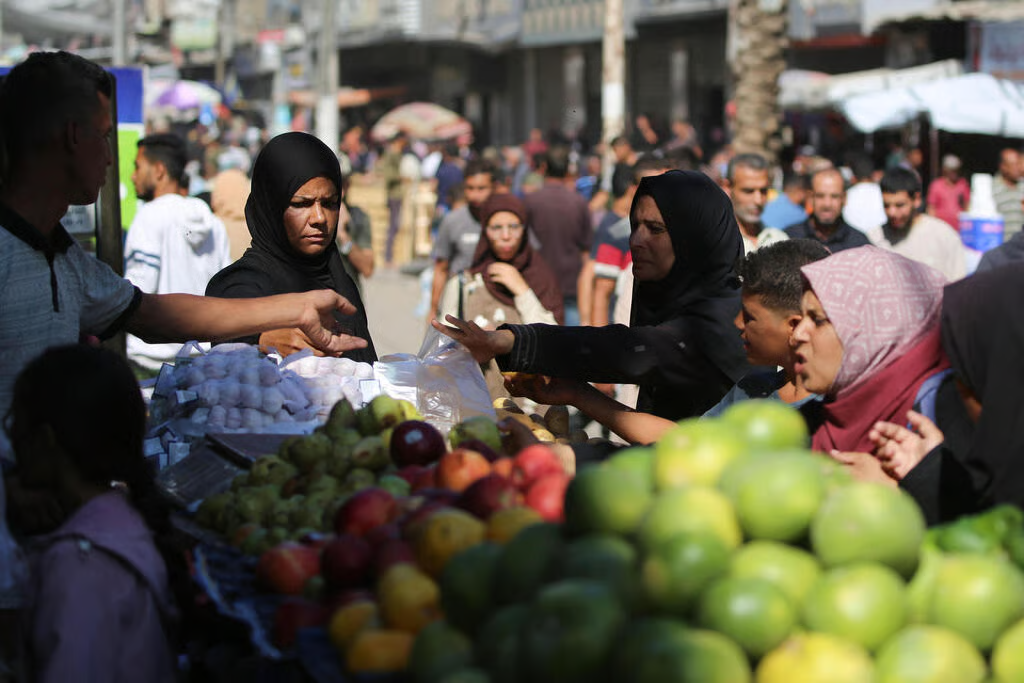
In the Gaza Strip, residents say prices have surged to unprecedented levels in recent months, due in part to “coordination fees” that have become a black market mechanism inside a monopolized market.
Locals are asking how it is possible that even after the war has ended, prices remain so high. Abu Ramadan argued that “once a certain group of traders is given control and power over the import of goods, they can continue manipulating prices and effectively create a monopoly over items in the market. For example, if one trader imports five truckloads of goods but has an allocation for ten trucks, he ‘sells’ the extra five trucks to others using a kind of tax or commission.
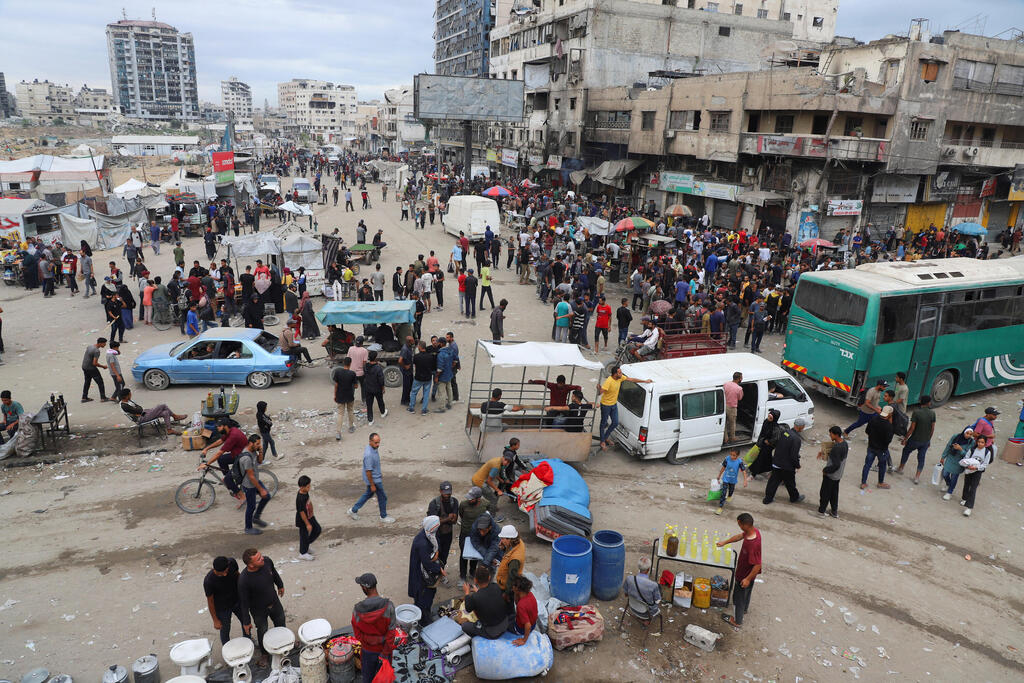
Photo: REUTERS/Ebrahim Hajjaj
“In other words, if he imports apples for another trader, and a kilo of apples costs him four shekels to import, that trader—who received authorization from Israel to import—can demand an additional four-shekel fee. So the trader pays eight shekels per kilo, and by the time it reaches the consumer, the price jumps to 12 shekels, which is extremely expensive compared to normal times.”
Samer Sinijlawi, a Fatah activist who follows reports on the situation, said that “the black money isn’t in transportation—it’s in the coordination mechanism. Only traders on the closed list can bring in goods, and they collect these fees from every other trader.”
Sinijlawi claimed that at the beginning of the war, only four traders were approved, and they immediately became an absolute monopoly. “The list of traders approved by COGAT must be published,” he said. According to him, more than 250 Gaza traders have applied in recent months, and only a very small handful were accepted, without criteria or explanations.
Those who were not approved remain frustrated. “Someone needs to convey this message to the Israeli side. This is not a political story; it’s a story of hunger. We just want to make a living. It’s a basic human request,” one of them told ynet.

He said this is the first time traders are organizing publicly against the mechanism. “Even if only once in our lives, we want our voice to be heard,” he added.
A senior Israeli security official stressed that “every trader who was screened and approved was thoroughly examined. There is absolutely no connection between the traders and Hamas. Every truck undergoes full inspection. We are operating with great caution to prevent any misuse of the mechanism.”
The mechanism chosen by Israel was meant to prevent Hamas from exploiting the situation to rebuild its capabilities. But by granting a small group exclusive access to imported goods, that group has gained near-total control over pricing. In Gaza—where demand is immense and supply is limited—almost any restriction quickly turns into an economic opportunity.
By Einav Halabi, for Ynet