

Archives. Texte publié le 21 avril 2025
From its inception, Israel’s existence was treated as a provocation. A home for the Jews? In the Middle East? Say it isn’t so.


Photo credit: PHIL NOBLE/REUTERS
There is a truth that many are afraid to say out loud: Israel is not hated because of what it does; Israel is hated because of what it is: a confident, successful, unapologetic Jewish state in a region – and world – that never wanted it to survive.
This hatred is not logical. It isn’t rooted in policy; it defies evidence. And yet, it pulses through international institutions, college campuses, Western media, and the streets of Europe’s major cities. It has become acceptable – even fashionable – to condemn Israel for defending itself, to brand it a colonial project, and to campaign not for coexistence but for its erasure.
Still, Israel endures. And not only does it endure; it excels. Despite relentless pressure, it builds, innovates, absorbs, defends, and creates. That is not just resilience; it is quiet defiance. And that is exactly why it will prevail.
This Is Real, and It Happens Every Day in CubaSponsored by Fact Fun Fiesta
Jean-Claude Dreyfus a épousé son compagnon, le musicien Nicolas EhretsmannSponsored by Voici
Former Hollywood Star Claims Reruns Are ‘Not Enough To Live’Sponsored by https://entertainmentglow.com
From its inception, Israel’s existence was treated as a provocation. A home for the Jews? In the Middle East? In lands Jews had lived in for centuries, long before Islam existed? The very idea was rejected violently by its neighbors.
Within 24 hours of Israel’s founding in 1948, five Arab nations invaded to strangle it in its cradle. They failed. So did every other attempt to destroy it, from conventional wars to intifadas, rocket barrages, and terror tunnels.

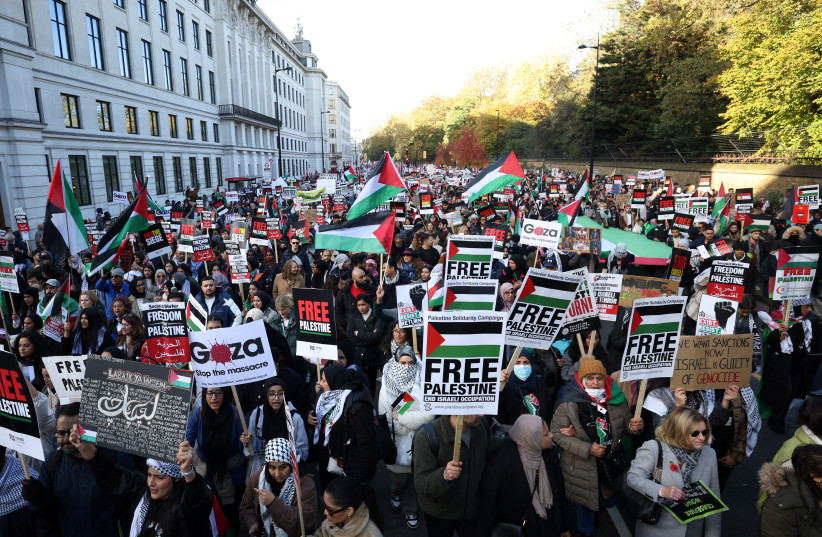
Credit: HOLLIE ADAMS/REUTERS
But Israel’s victory on the battlefield was only one front. The deeper war – the more insidious one – is the war of perception. And in that war, Israel faces a much darker force: the normalization of anti-Jewish double standards disguised as social justice.
Today, anti-Zionism has become the socially acceptable mask of antisemitism. Its proponents no longer shout “Death to the Jews” but “From the river to the sea.” They no longer burn synagogues; they boycott Jewish businesses, intimidate Jewish students, and deny Jews the right to self-determination under the language of liberation.
THIS HATRED now hides behind the word “Palestine,” but its target remains the same: Jewish legitimacy, Jewish security, and Jewish survival.
It is important to state clearly that criticism of Israel is not antisemitism. But denying Israel the right to exist is antisemitism. Holding it to impossible standards no other nation is judged by is antisemitism. And treating its people as permanent suspects, even when under attack, is antisemitism.
Still, even as hatred grows louder, Israel must not flinch. In fact, its answer should not be appeasement; it must be moral clarity.
The world accuses Israel of apartheid, while Arab citizens sit in its parliament, attend its universities, serve in its judiciary, and walk freely in every city. The world calls it a colonial project as if the return of a people to their indigenous homeland after two thousand years of exile, persecution, and genocide is colonialism. The world accuses it of genocide, while its army warns civilians before striking terror targets embedded in homes and hospitals – something no other military on Earth does.
Israel must stop apologizing for existing
Israel cannot spend its energy begging the world to understand. It must stop apologizing for its existence. There is no moral justification for its enemies firing rockets from playgrounds, launching terror attacks in synagogues, or using their own people as human shields. There is no moral high ground in calling for the annihilation of a nation.
So, how does Israel respond? Not just with military strength, but with narrative strength.
It must start telling its story again and telling it better. The world does not need another defensive press release. It needs truth with a spine. It needs voices that stop chasing Western approval and start asserting moral reality.
Israel must stop letting its enemies define the terms of the debate. “Occupation”? The land it is accused of occupying is the same land offered to the Palestinians in countless peace deals, all of which were rejected, not because of borders but because of Israel’s existence. “Colonialism”? There has never been a Palestinian state to colonize. Jews are not foreigners in Jerusalem, Hebron, or Tiberias. They are natives returning home.
And to those who chant “Free Palestine” while excusing the murder of Jewish civilians, Israel must respond: Freedom is not the right to erase another nation.
BUT THE strategy cannot stop at defense. Israel must go on the offense culturally, diplomatically, and intellectually. It must invest deeply in media, storytelling, and international education. Not dry facts, but bold narratives that make people feel the truth.
People don’t rally around spreadsheets; they rally around stories. The story of Israel is powerful – one of trauma, triumph, rebirth, and hope. The world needs to hear it from Israelis themselves, not filtered through foreign correspondents or activist NGOs with political agendas.
Beyond messaging, Israel must redefine its alliances. For too long, it has sought love from Western elites who will never grant it. It’s time to build partnerships not just with governments but with people – from African innovators to Eastern European thinkers to Arab dissidents who admire Israel’s strength and stability.
Israel’s moral support may not come from the traditional halls of European diplomacy but from a new coalition of nations and individuals who admire what it truly stands for: liberty, innovation, and survival.
Domestically, Israel must never let the hatred abroad poison the soul within. The answer to hate is not fear; it is faith. Faith in its democracy, resilience, and diversity. The Jewish state must remain what it has always strived to be: a beacon of pluralism and progress in a region suffocated by tyranny. Its greatest revenge against its enemies is to keep flourishing.
And for Jews around the world, the message must be loud and clear: You do not owe anyone an apology for supporting Israel. Zionism is not extremism; it is justice. It is the belief that Jews have the right to live safely in the only country that exists to protect them when the world turns away, as it so often has.
Israel was never meant to be liked. It was meant to survive. And it has done more than that; it has given a scattered people a future, dignity, and a flag to rally around. That flag, the blue and white, is not a symbol of conquest. It is a promise: Never again will Jews rely on others for safety, justice, or identity.
So yes, the world may hate Israel. But Israel does not exist to be liked. It exists to be free. And in its freedom, it has outlasted every enemy, defied every expectation, and proven, over and over, that hatred is not stronger than history.
In the end, Israel does not need to win hearts to be victorious. It only needs to stand tall, clear, and unafraid.
And it will.
© Amine Ayoub
The writer, a fellow at the Middle East Forum, is a policy analyst and writer based in Morocco. Follow him on X/Twitter: @amineayoubx.
VF
L’écrivain et analyste politique arabe Amine Ayoub, qui vit au Maroc, a publié en avril 2025 ce texte: « Israël doit cesser de s’excuser pour son existence »
Extraits
■ Il y a une vérité que vous ne dites généralement pas à haute voix. Israël n’est pas détesté pour ce qu’il fait. Israël est détesté pour ce qu’il est. Et pour ce qu’il est vraiment – un pays prospère, inflexible et confiant en soi.
■ Cette haine est existentielle. Il ne se laisse pas expliquer. Il n’a rien à voir avec la politique et est sans logique. Et il est partout – dans les institutions internationales, sur les campus universitaires, dans les milieux universitaires, dans les médias, dans les rues. Là où il est acceptable – oui même aussi fantaisiste – de qualifier Israël de puissance coloniale, pour la tentative de survivre et non d’être détruit. Là où ce n’est plus une question d’existence – mais seulement une sorte d’annihilation.
■ Ce qui ennuie avec le phénomène d’Israël, c’est qu’il résiste à tout cela. Ce n’est pas juste debout, c’est florissant. Construire, inventer, implémenter, absorber, protéger, créer. Ce n’est pas juste de la résilience. C’est plus qu’une simple désobéissance. C’est un défi. Un défi qui met ce monde si en colère.
■ L’existence d’Israël a été perçue comme un défi dès le début. Une maison pour les Juifs ? Au Moyen-Orient ? Dans les pays où les Juifs ont vécu pendant des siècles – bien avant l’avènement de l’Islam ? L’idée a été rejetée dans le monde sous la colère.
■ Cinq États arabes ont tenté d’étrangler l’État juif dans des germes en 1948. Ça n’a pas fonctionné. Ils ont continué d’essayer et d’essayer – guerres, intifadas, roquettes, hordes de terroristes – mais Israël a toujours réussi à se défendre.
■ Malheureusement, il y a une autre guerre à laquelle Israël ne peut pas résister. Une guerre ridicule et odieuse, la guerre médiatique.
■ Dans cette guerre, Israël fait face à une puissance bien sinistre : une campagne de dénigrement sanglante, désormais servie sous couvert de justice sociale, dans la lutte contre le colonialisme, dans la lutte pour la paix.
■ L’antisionisme moderne est devenu une forme juridique et socialement acceptée d’antisémitisme. Pas besoin de crier « Mort aux juifs » quand il y a « De la rivière à la mer. » Il n’y a pas de raison de détruire les boutiques et les entreprises juives si vous pouvez les exposer à un boycott universel à la place. Et une étoile jaune n’est pas nécessaire si vous pouvez ouvertement nuire aux Juifs parce qu’ils ne montrent pas assez d’amour pour les Palestiniens.
■ L’antisémitisme se cache maintenant derrière le mot « Palestine ». Les objectifs sont restés les mêmes : aucune légitimité pour les Juifs, aucune sécurité pour les Juifs, aucune survie pour les Juifs.
■ Oui, critiquer Israël n’est pas antisémitisme. Le déni du droit d’Israël à exister – c’est de l’antisémitisme. Appliquer à Israël des normes irréalisables selon lesquelles aucun autre pays n’est jugé est de l’antisémitisme. Traiter le peuple d’Israël comme coupable dès le début – pour tout et sans exception (même lorsqu’il est attaqué) – c’est de l’antisémitisme.
■ Le monde accuse Israël d’apartheid – tandis que les citoyens arabes s’assoient à la Knesset, étudient dans les universités, travaillent dans la justice, sans restrictions et se déplacent librement où ils veulent.
■ Le monde qualifie Israël de projet colonial, comme si le retour d’un peuple dans sa patrie après deux mille ans d’exil, de persécution et de génocide était du colonialisme.
■ Le monde accuse Israël de génocide, alors que l’armée israélienne avertit les civils palestiniens des frappes contre les terroristes qui se cachent sous les maisons, les mosquées et les hôpitaux – ce qu’aucune autre armée dans le monde ne fait.
■ Israël ne doit pas hésiter un instant, même si la haine devient insupportable. Israël doit arrêter de s’excuser d’exister. Il ne sert à rien de gaspiller de l’énergie à supplier le monde de comprendre et d’accepter cela.
■ Comment Israël devrait-il agir ? Tout comme les gens courageux et intelligents le font, de la façon dont les gens du livre agissent. Israël doit recommencer à raconter son histoire d’une manière telle (il y en a des exemples ! ), que le monde entier y croira.